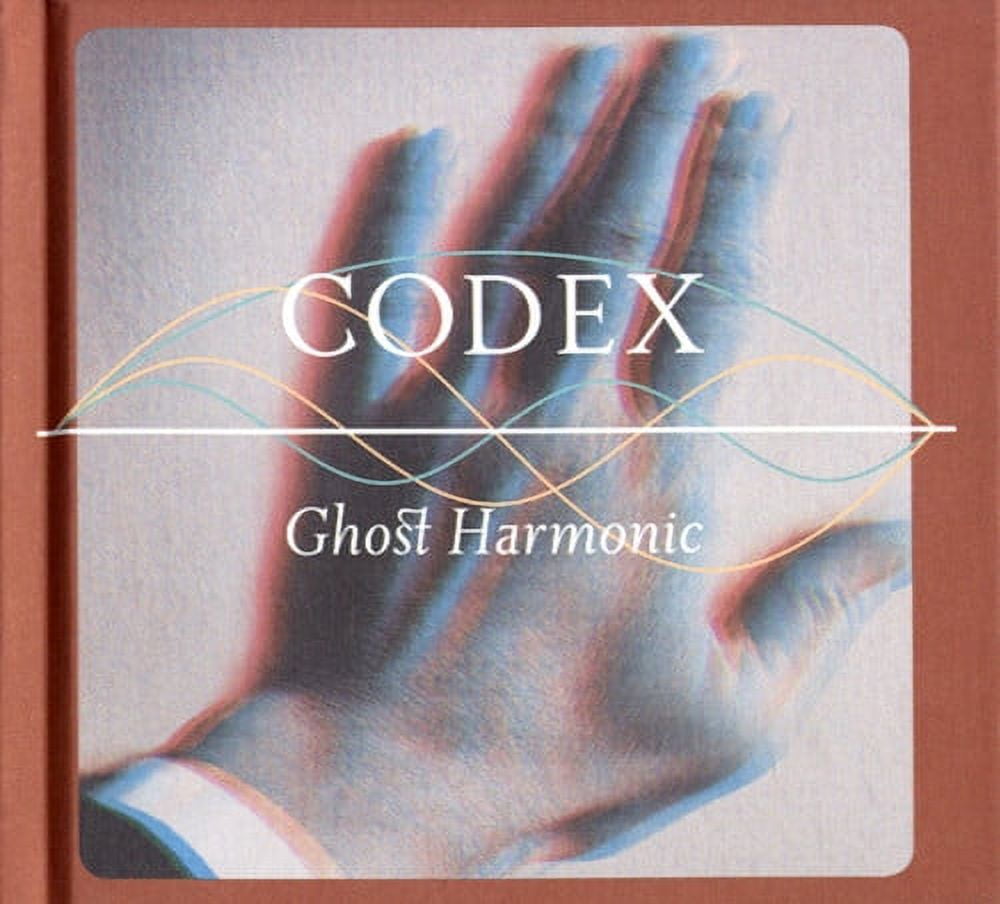
Ghost Harmonic are violinist Diana Yukawa and electronic pioneers John
Foxx and Benge (John Foxx and the Maths). Working at Benge's
MemeTune Studios in Shoreditch, London, they combined the purity of Yukawa's
violin with the complexity and textured noise of analog machinery. As Benge puts
it, "there is something very satisfying about combining Diana's beautiful 17th
Century violin with a subsonic tone-blast from a Moog Modular." "It was fairly
open," says John Foxx, "but I guess the underlying intention was we all wanted to
see what might happen when a classically trained musician engaged with some of
the possibilities a modern recording studio can offer... multi-tracking, vast notional
spaces, long echoes, looping, retuning, layering, synthesisers, sound effects,
vintage and cheap equipment etc. Also we wanted to improvise, since that seldom
happens in the classical world. Diana was a welcome revelation... She picked up
themes immediately and took them off in all directions. Very exhilarating." "There
was a really good flow between us all," explains Diana. "You never know what to
expect in the beginning, creating a new dynamic between three different people
but I think it's our different backgrounds and influences that made everything come
together with such fluidity." Using a tape delay system, Yukawa was able to play
along to her own parts, layering the sound. Any background noise was treated as
part of the recording. John Foxx: "I noticed an interesting effect when multitracking
into long or complex reverbs - certain harmonics would be suppressed or
enhanced and previously unheard ones would emerge from the miasma. This can
be really beautiful... I know a piece is going somewhere new when this sort of
thing begins to occur." "Benge's studio is so full of character that the energy of that
is embedded into the album," states Diana. The five tracks on Codex are linked
into one continuous piece, by turns elegant, dark, and gently blissful. Some tracks
recall the overgrown cities of Delvaux and Ernst, especially "A Green Thought
in a Green Shade" and "The Pleasure of Ruins." "Dispersed Memory" has a
strange, alien atmosphere, as the dreamlike languor and melting time of the
opening becomes more isolated and chilling. "When We Came to This Shore" is
serene but eerie, like being pulled by the tides to a submerged city or underwater
forest. "Codex" closes the album with a sense of stillness and faded beauty.
Limited hardcover book edition.
| Performer |
Ghost Harmonic |
| Music genre |
Rock |
| Music subgenre |
CD - ROCK |
| Music release type |
Release |
| Media format |
CD |
| Original release date |
2015 |
| Edition |
Standard |
| Number of tracks |
5 |
| Has parental advisory label |
N |
| Number of discs |
1 |
| Series title |
Ghost Harmonic - Codex [CD] |
| Track listing |
01. a Green Thought in a Green Shade (7:30), 02. the Pleasure of Ruins (13:32), 03. Dispersed Memory (6:16), 04. When We Came to This Shore (16:58), 05. Codex (5:29) |
| Record label |
Metamatic |
| Track name |
A Green Thought In A Green Shade, The Pleasure Of Ruins, Dispersed Memory, When We Came To This Shore, Codex |
| Digital audio file format |
CD |